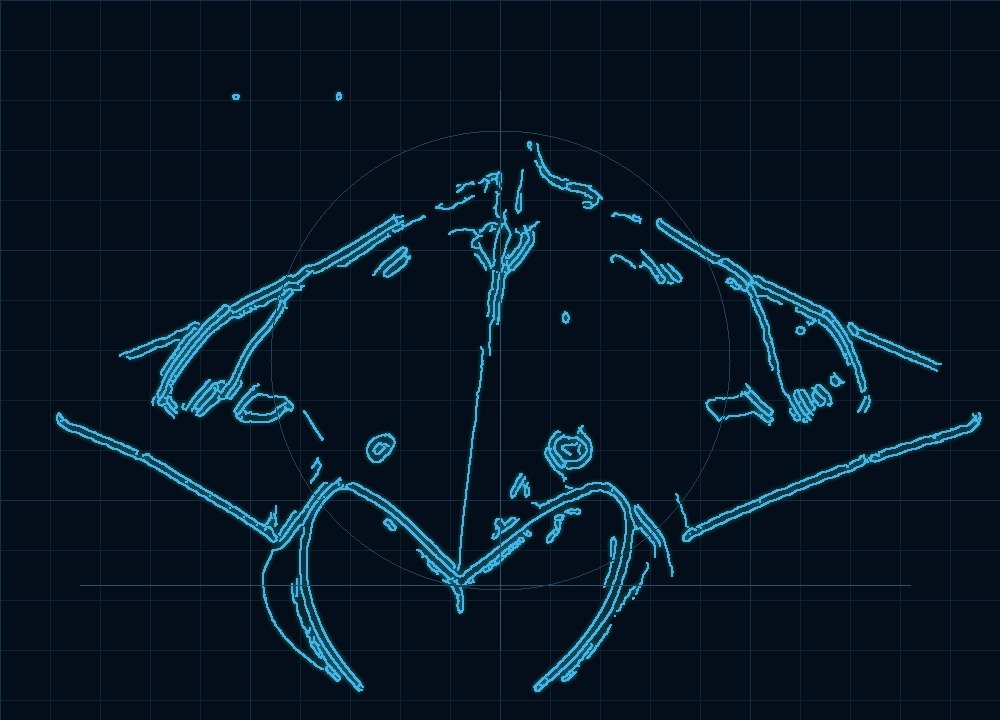
Hydrodynamic Design
Manta- and stingray-inspired planforms developed for efficient undersea movement, stability, and mission fit.
Advanced autonomy. Unmatched focus.
I2D integrates biomimetic form, modular American systems, secure mission architecture, and AI-assisted autonomy into undersea platforms designed for decisive operational advantage.
Technology pillars
The public view is intentionally architectural. Detailed engineering, software, performance, signature, payload, and mission information remains controlled.
Manta- and stingray-inspired planforms developed for efficient undersea movement, stability, and mission fit.
AI-assisted navigation and mission systems informed by approved models, parameters, and operator authorization.
Controlled data exchange, mission updates, and integration with qualified government systems.
Modular internal architecture intended to reduce integration friction across approved configurations.
Vehicle form, emissions, communications behavior, and mission profile considered together.
Requirements, interfaces, verification, traceability, safety, and mission assurance developed as one program.
AI and operator authority
I2D’s public autonomy model is operator-authorized and mission-specific. AI is intended to assist navigation, sensing, classification, adaptation, and execution against approved objectives.
Public materials do not disclose training data, target models, decision thresholds, control logic, safety logic, failure modes, source code, or terminal behavior.
American technology advantage
Domestic engineering, domestic components, and disciplined information control protect the technology and the mission it serves.