Interactive ethnomathematics laboratory
Mesoamerican Math Explorer
Number, Time, Calculation, Calendar, and Cultural Perception
Learn to read Maya bar-and-dot numerals, calculate in base 20, distinguish ordinary vigesimal notation from Long Count timekeeping, and investigate two major manuscript traditions through clearly labeled evidence and interpretation.

Module 1
Bars, dots, zero, and visual place value
A dot represents one, a bar represents five, and a zero sign holds an empty position. Select a numeral, build one manually, or convert a decimal value into a vertical Maya stack.
Numerals 0–19
Each card is an inline SVG teaching form. Select a card to separate its components.
Selected value
0
A zero sign marks an empty place. Historical forms vary by period, medium, and scribal convention.
Build a numeral
Drag or tap symbols into the work area. A single digit can represent 0–19.
Drop symbols here or tap a symbol above.
Build a value from 0 to 19.
Decimal ↔ vertical Maya notation
Compare pure vigesimal place value with modified Long Count units.
Zero is not a single universal drawing
The explorer uses a clean shell-like teaching symbol while acknowledging variation in attested signs.


Methodological caution: these comparative SVGs are pedagogical abstractions, not claims that every Maya community, period, or medium used an identical zero glyph.
Comparative Mesoamerica: Nahua/Mexica quantity signs
A regional comparison prevents “Mesoamerican” from becoming a synonym for “Maya.”
These are schematic modern drawings of signs documented in Central Mexican manuscript traditions. They are presented for conceptual comparison, not as Maya equivalents.
Modules 2–3
Visual arithmetic in base 20
Regrouping occurs at twenty rather than ten. The explorer demonstrates carrying, borrowing, repeated groups, equal sharing, and remainders through visible objects.
Addition and subtraction laboratory
Choose a guided example or generate a practice problem. Use the step controls to reveal the logic.
Multiplication and division as visible relationships
Version 1 uses repeated groups, arrays, equal sharing, repeated subtraction, and remainder.
Module 4
Zero, modified vigesimal structure, and deep time
The Long Count preserves a vigesimal orientation but forms the tun from 18 winals: 18 × 20 = 360 days. That modification keeps the count close to a solar-year scale without making it a solar calendar.
Long Count unit ladder
Common error: treating the Long Count as a completely pure base-20 stack produces incorrect day totals because the tun position uses 18 rather than 20 winals.
Total days to Long Count units
Calendars as cultural infrastructure
Multiple cycles can organize ritual, agriculture, naming, authority, memory, and prediction at the same time.
Case Study I
Xultun Text 19 and Sak Tahn Waax
A painted Classic-period microtext from Structure 10K-2 at Xultun records a distinctive 2,920-day astronomical-calendrical formula and closes with a personal attribution to Sak Tahn Waax, “White-chested Fox” (Rossi, Stuart, and Hurst 2026).
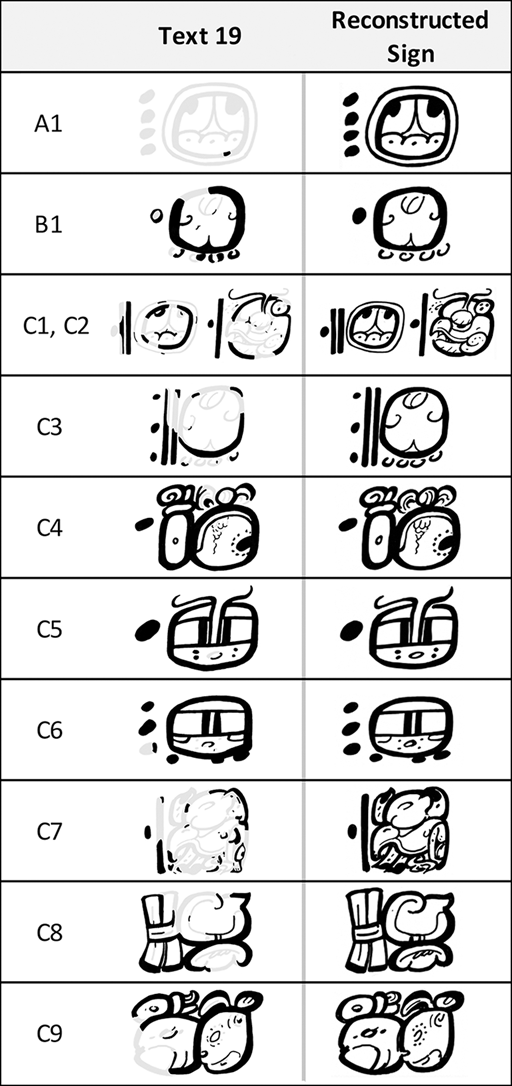
Figures from Rossi, Stuart, and Hurst 2026, Antiquity, CC BY-NC 4.0. Used with attribution for noncommercial education.
Glyph-block guide
Select a position to inspect the visible record, reconstruction, mathematical role, and interpretive confidence.
The 2,920-day commensuration
The total equals five conventional 584-day Venus periods and eight 365-day Haab’ years. Text 19 also parcels the count through other cycles.
Case Study II
The complete Dresden Codex Venus Table
The table spans Dresden page 24 and pages 46–50. Page 24 provides prefatory and correction information; pages 46–50 repeat a structured Venus-year format through five trajectories and thirteen rows, producing a 37,960-day table of about 104 years.
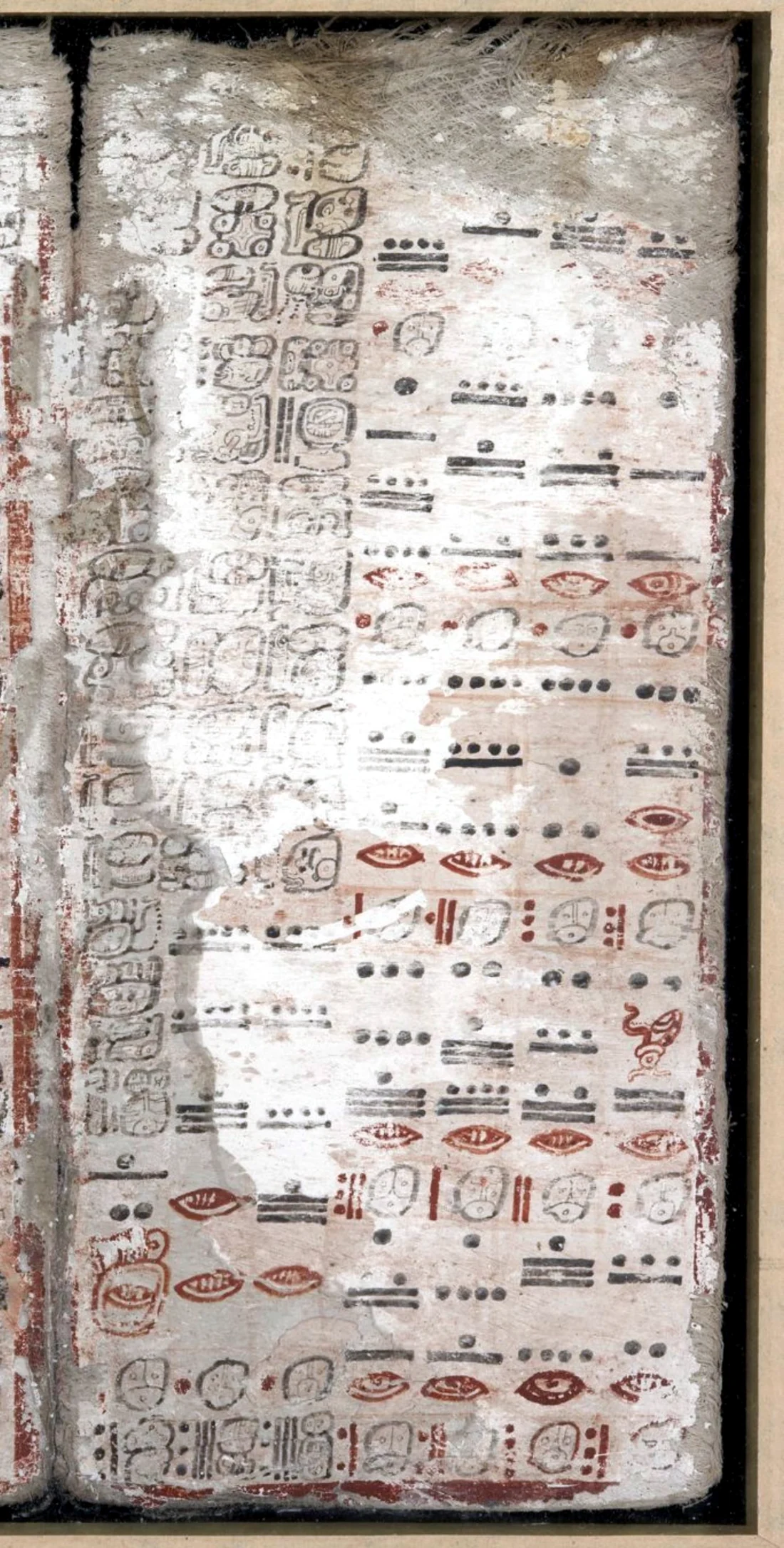
Facsimile: The Dresden Codex, World Digital Library / Library of Congress, original held by SLUB Dresden. The Library of Congress reports no known copyright restrictions and asks that the material be approached with respect for the culture and intellectual traditions represented.
Venus phase intervals used by the table
These conventional intervals form a 584-day modeled synodic period. They are a calendrical model, not a claim of exact daily observational visibility under all conditions.
Academic grounding
Annotated references
References are grouped by the part of the explorer they support. Notes distinguish foundational use, case-study evidence, comparative context, and methodological limits.
Methodological note
How the explorer moves from symbol to interpretation
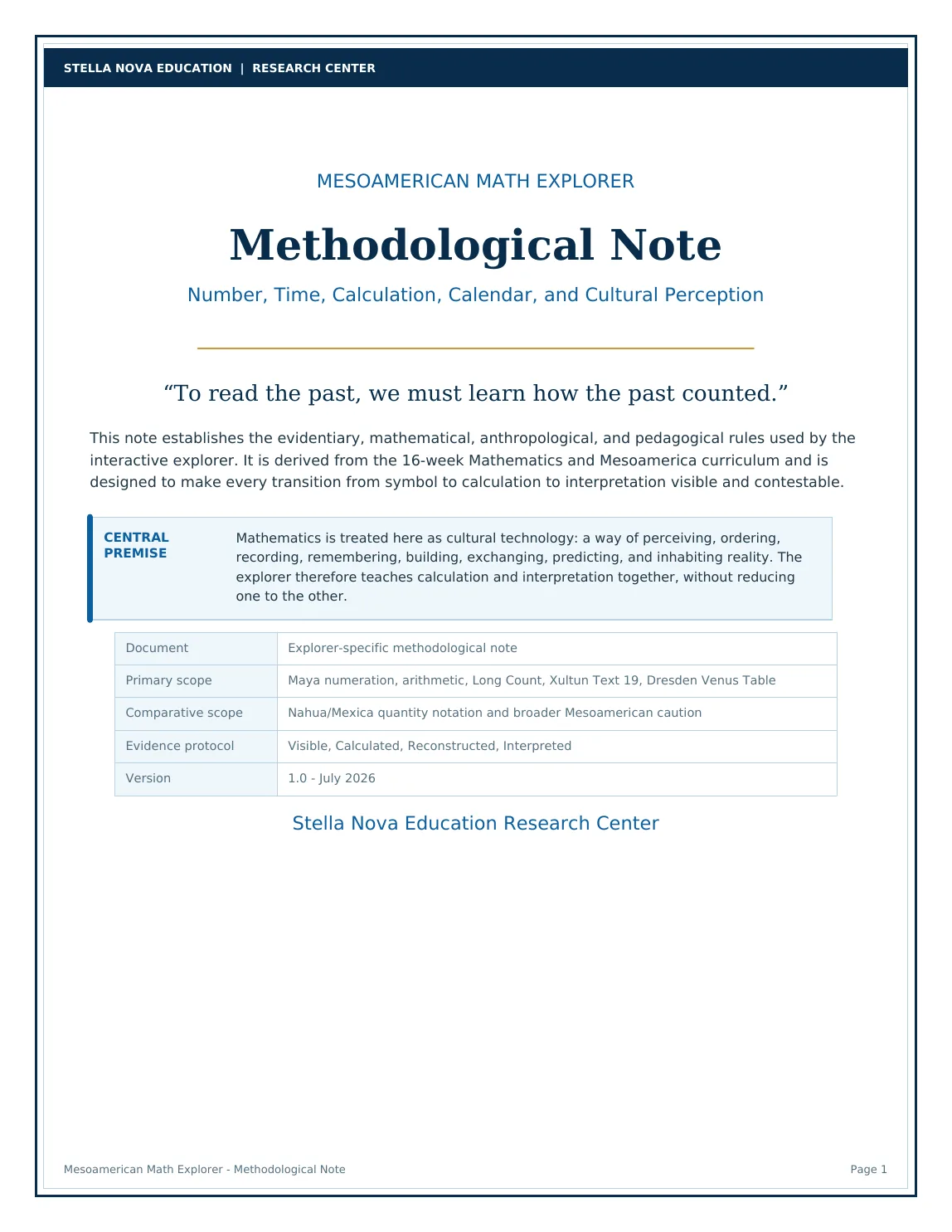
The dedicated note is derived from the Mathematics and Mesoamerica curriculum and addresses cultural translation, notation, calendrical structure, manuscript evidence, uncertainty, and ethical AI use.

Research community comments
Questions, corrections, and additions
Use this local annotation log for mathematical corrections, epigraphic cautions, pedagogical observations, comparative examples, or sources that should be evaluated for a later version.
Community log
Entries are stored locally in JSON with file locking and basic abuse controls.
Loading comments…